Gangsta Rap Fashion: From Streetwear to Mainstream
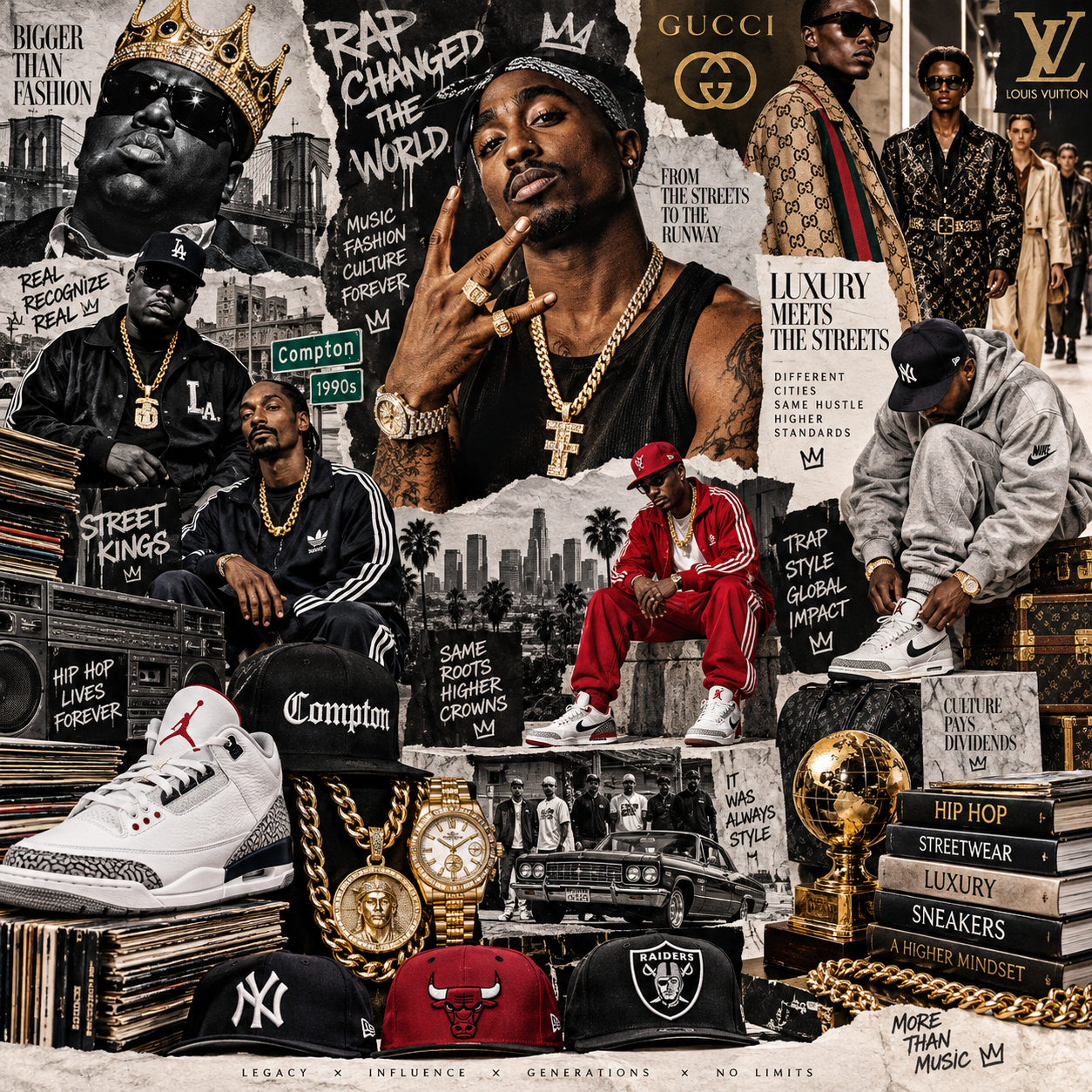
Gangsta rap fashion developed through the meeting of music, neighborhood style, sportswear, and visual storytelling. What began as practical clothing connected to local identity became a recognizable rap image, then moved through music videos, endorsements, collaborations, and luxury fashion into the mainstream.
The look has never been one fixed uniform. Regional scenes, individual artists, economic realities, and changing ideas of status all shaped it. To understand gangsta rap fashion, it helps to see clothing as part of rap’s larger language: a way to communicate confidence, belonging, ambition, resistance, and presence before the first verse begins.
What Defines Gangsta Rap Fashion?
Gangsta rap fashion is a bold, street-rooted style built around oversized silhouettes, sportswear, expressive accessories, and a strong connection to rap identity. Its visual impact comes from the combination of proportion, repetition, and personal symbolism rather than from one mandatory outfit.
Oversized clothing became one of the clearest visual codes. Loose T-shirts, roomy denim, broad jackets, and relaxed trousers created a silhouette that felt comfortable, confident, and visually commanding. The extra volume also worked well on stage and in music videos, where movement and recognizable outlines mattered.
Sportswear supplied another foundation. Team jackets, warm-up gear, tracksuits, baseball caps, and sneakers connected rap artists to basketball, football, baseball, and the everyday style of urban communities. These pieces carried local and national associations, allowing an outfit to suggest allegiance without explaining it.
Accessories intensified the message. Gold chains and jewelry could signify achievement, ambition, or independence, while a carefully chosen cap, belt, watch, or ring completed the public image. The style was often polished even when the garments were casual. That contrast became central to rap’s visual authority.
The Streetwear Foundations of the Look
The streetwear foundations of gangsta rap fashion came from practical urban clothing, athletic apparel, denim, team symbolism, and layered styling. These garments were accessible, durable, and easy to adapt, which made them useful for everyday life as well as performance.
Streetwear did not begin as a luxury category. It grew through communities that mixed workwear, sports uniforms, regional trends, and independent labels. In rap, a plain T-shirt could sit beneath a flannel, leather jacket, or varsity-style coat; denim could be paired with high-top sneakers; and a sports cap could become the final detail that gave the outfit its location and attitude.
Layering was especially important. It allowed artists to change the visual weight of an outfit without changing every garment. A long shirt beneath a jacket created depth, while a vest over a sweatshirt added structure. This approach also helped performers build a distinctive outline for album photography, live shows, and music videos.
Sneakers were central because they connected comfort, movement, and cultural knowledge. Basketball shoes, classic trainers, and high-tops could indicate taste as clearly as a designer logo. Yet the meaning depended on context. A rare pair might express status, while a familiar everyday model could communicate loyalty to a local style.
The result was a style system that favored recognizable pieces over complicated tailoring. A strong fit could come from proportion, color, and coordination rather than from expensive construction.
Regional Scenes and Artist Influence
Regional rap scenes and individual artists gave gangsta rap fashion its variety. West Coast, East Coast, Southern, and Midwestern communities developed different relationships with color, tailoring, sportswear, denim, outerwear, and accessories.
West Coast styles were often associated with relaxed silhouettes, coordinated color, sports references, and a strong connection to cruising and neighborhood presentation. East Coast interpretations frequently emphasized heavier outerwear, darker palettes, boots or sneakers, and a sharper urban edge. Southern scenes brought their own approaches to oversized clothing, vivid color, hats, jewelry, and luxury signals. These descriptions are broad rather than absolute: artists regularly borrowed from one another, and audiences reshaped every influence.
Artists mattered because they turned clothing into a repeatable character. Album covers, interviews, concerts, and public appearances made certain combinations memorable. A rapper’s preferred cap shape, jacket, chain, or sneaker could become part of the audience’s understanding of that artist’s voice.
Music also changed how these clothes were read. A jacket seen during an aggressive performance might communicate authority; the same jacket in a casual interview could suggest accessibility. Fashion followed the narrative of the artist, not just a list of garments.
For a useful wider context on hip-hop’s historical development and cultural reach, readers can consult the overview of hip-hop culture. The important point is that fashion traveled with the music while retaining traces of its original community.
Iconic Clothing and Accessories
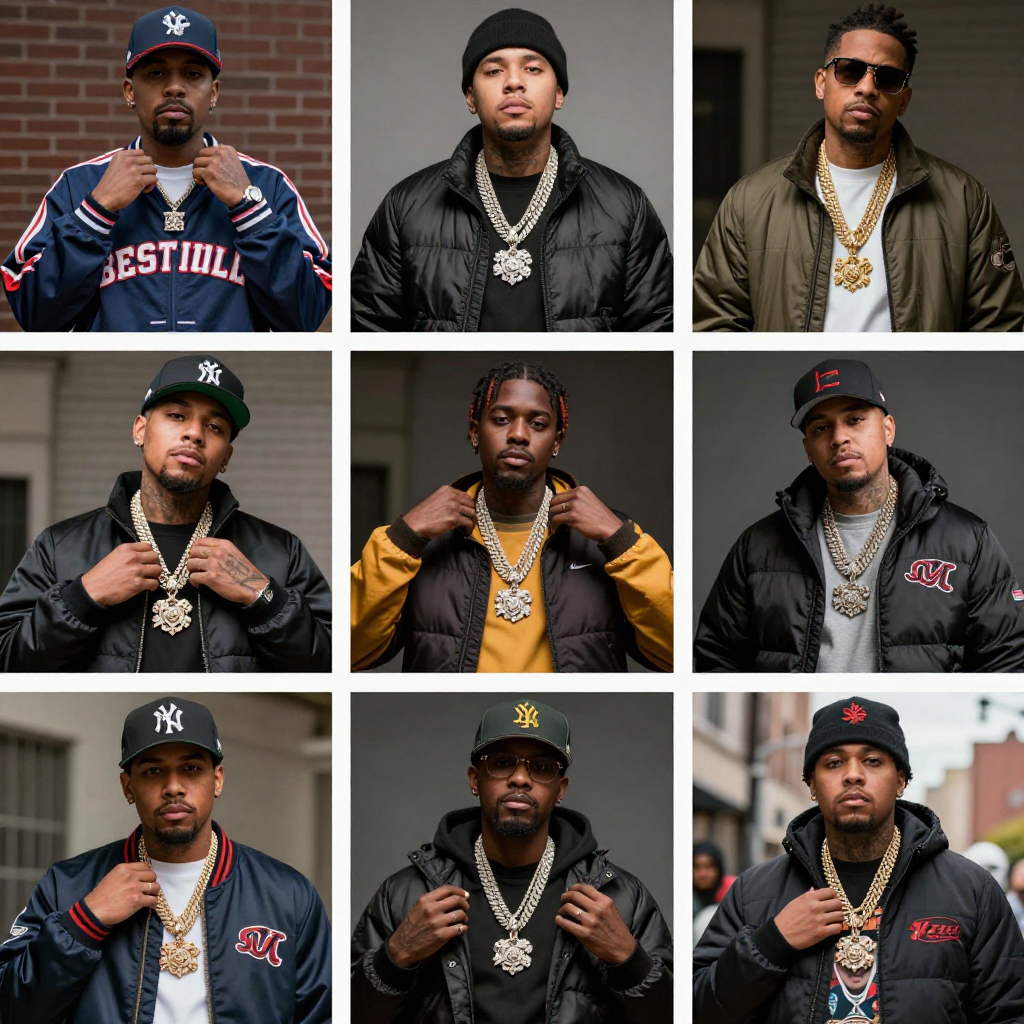
The most recognizable pieces include oversized shirts, tracksuits, caps, sneakers, leather jackets, statement outerwear, and gold jewelry. Their importance comes from how artists combined them to create status, movement, and a memorable public image.
Oversized Shirts and Outerwear
Oversized shirts established a broad silhouette and gave performers room to move. Layered beneath leather, denim, varsity, or sports jackets, they created a sense of depth that translated well to cameras. Statement outerwear could then carry the strongest visual message through color, texture, patches, or team references.
Caps, Tracksuits, and Sneakers
Baseball caps and snapbacks offered a practical way to shape an outfit and signal affiliation. A cap could be worn straight, angled, or coordinated with a jacket and sneakers. Tracksuits added another recognizable form: athletic in origin, but increasingly connected to leisure, travel, performance, and public visibility.
Sneakers completed the connection between streetwear and motion. Their condition, rarity, colorway, and cultural association could matter as much as their function. In a rap setting, footwear often became a close-up detail in photography and video.
Gold Chains and Jewelry
Gold chains, pendants, watches, rings, and bracelets made success visible. Jewelry could represent money, resilience, family, neighborhood pride, or artistic arrival. It also changed the balance of a casual outfit: a simple shirt and denim combination could become unmistakably ceremonial once paired with substantial gold.
These items should be read as cultural symbols, not costume props. Copying a few surface details while ignoring the music, history, and personal meaning behind them can flatten the style into parody.
From Music Videos to the Mainstream
Music videos carried gangsta rap fashion from local scenes to national and international audiences. Repeated exposure made specific silhouettes, accessories, and styling choices familiar to viewers who had never encountered the original neighborhood context.
Video directors helped fashion become part of the song’s visual argument. Close-ups highlighted jewelry and sneakers; wide shots showed coordinated groups; cars, interiors, sports courts, and streets provided settings that gave clothing social meaning. The outfit was inseparable from the performance, camera movement, lyrics, and production design.
Television, magazine photography, award shows, and touring expanded that reach. Fans did not simply hear an artist; they saw a complete identity that could be remembered and imitated. Retailers recognized the demand, while mainstream labels borrowed the proportions and symbols of streetwear for a broader consumer market.
This transition created a tension between visibility and ownership. Commercial adoption helped streetwear reach new audiences, but it could also remove garments from their local context or turn meaningful details into seasonal trends. The same cap, tracksuit, or sneaker might function as personal expression in one setting and as a marketing shorthand in another.
Luxury Fashion and the Evolution of Rap Style
Luxury fashion adopted rap style through designer references, celebrity visibility, brand collaborations, and a growing acceptance of sneakers and streetwear in high-fashion spaces. Rap artists increasingly treated designer clothing as part of authorship and status rather than as a separate world.
The relationship moved in both directions. Designers borrowed oversized proportions, athletic garments, graphic branding, and jewelry-heavy styling. Rap artists used luxury labels to signal achievement, refine their public image, and place street-born taste inside elite fashion environments.
Collaborations made this exchange especially visible. A sneaker, jacket, or capsule collection could combine a brand’s production resources with an artist’s audience and cultural credibility. That partnership offered opportunity, but it also raised questions about authenticity, access, and who benefits when community style becomes a profitable product.
Luxury adoption did not erase the original streetwear logic. A high-priced tracksuit still draws on the visual language of athletic clothing; a runway sneaker still depends on the cultural history of footwear; and a designer interpretation of oversized denim remains connected to earlier everyday styling.
Choosing luxury for its craftsmanship or lasting construction can make sense, but price alone does not create cultural legitimacy. The strongest looks usually come from a clear point of view, whether the garments are custom-made, vintage, or bought from an ordinary sportswear retailer.
The Legacy of Gangsta Rap Fashion Today
Gangsta rap fashion remains influential because contemporary artists continue to adapt its silhouettes, accessories, and visual confidence to new eras. Today’s interpretations may mix vintage sportswear, technical fabrics, designer pieces, independent labels, and references from several regions at once.
Modern styling is often more fluid than earlier categories suggest. An artist might combine a fitted luxury coat with relaxed denim, pair a classic snapback with experimental sneakers, or use a tracksuit as part of a carefully tailored wardrobe. Gender expression, digital media, and global streetwear communities have widened the range of possible interpretations.
For anyone drawing inspiration from the style, the most respectful approach is to study the context before copying the surface. Listen to the artists, learn how regional scenes differ, and identify the reason a garment matters. Then adapt one or two elements through your own wardrobe rather than assembling every familiar symbol at once.
- Start with proportion: choose either a relaxed silhouette or a more tailored contrast.
- Use one strong cultural reference, such as a cap, sneaker, or sports jacket, instead of stacking every signature item.
- Let quality, fit, and personal connection matter more than visible logos.
- Avoid presenting stereotypes about crime, poverty, or violence as the meaning of the fashion.
The lasting lesson is that gangsta rap fashion turned everyday clothing into a deliberate public language. Its legacy lives in the continuing exchange between music, streetwear, performance, and luxury fashion.
Gangsta Rap Fashion FAQ
What is gangsta rap fashion?
Gangsta rap fashion is a rap-linked style associated with oversized clothing, sportswear, sneakers, caps, gold jewelry, denim, leather, and confident presentation. It developed through regional streetwear cultures and artist-led visual storytelling.
What clothing is associated with gangsta rap style?
Common examples include oversized T-shirts, relaxed denim, tracksuits, varsity and leather jackets, baseball caps, snapbacks, sports jerseys, and sneakers. The exact combination varies by era, region, artist, and personal taste.
How did gangsta rap influence mainstream fashion?
Artists and music videos gave streetwear national visibility. Retailers, celebrities, designers, and luxury brands then adopted elements such as oversized silhouettes, sneakers, athletic clothing, bold jewelry, and logo-focused styling.
Which accessories are central to the look?
Gold chains, pendants, watches, rings, bracelets, baseball caps, snapbacks, and distinctive sneakers are among the central accessories. Their meaning comes from how they relate to identity, achievement, affiliation, and performance.
How can the style be adapted today without treating it as a costume?
Learn the music and cultural context, choose references that genuinely fit your wardrobe, and avoid turning stereotypes into decoration. A single well-understood element, such as a cap or relaxed jacket, often communicates more effectively than an exaggerated full outfit.