How Gangsta Rap Shaped Modern Hip-Hop: A Legacy That Still Hits Hard
What Is Gangsta Rap? A Quick Foundation
Gangsta rap is a subgenre of hip-hop that emerged in the mid-1980s, defined by raw first-person narratives about street life, violence, poverty, and conflict with law enforcement. It broke sharply from the party-oriented and socially conscious rap that preceded it, replacing polished optimism with unflinching realism.
The genre took root primarily in Los Angeles and Compton, California, giving rise to what became known as West Coast rap. Where earlier hip-hop often spoke about social struggle from a distance, gangsta rap put the listener directly inside the experience — the block, the confrontation, the consequence. That intimacy was jarring, and it was deliberate.
Three elements defined the sound from the start: hard-hitting drum programming, bass-heavy production, and lyrics that refused to sanitize street reality. Those same three pillars still echo through the music topping charts today.
The Pioneers Who Built the Blueprint
The foundational architects of gangsta rap are a short, essential list — and N.W.A sits at the top of it. Formed in Compton in 1986, the group assembled Ice Cube, Dr. Dre, Eazy-E, MC Ren, and DJ Yella into something that sounded genuinely dangerous. Their 1988 debut Straight Outta Compton — released on Ruthless Records — didn't ask for mainstream acceptance. It didn't need to.
Ice Cube's pen brought prosecutorial precision to street narratives. Eazy-E's delivery was cold and deadpan in a way that felt more threatening than shouting. And Dr. Dre's production gave it all a cinematic weight that radio wasn't ready for but couldn't ignore.
Beyond N.W.A, artists like Ice-T on the East Coast were carving parallel paths. His 1987 track "6 'N the Mornin'" is widely cited as one of the earliest gangsta rap records, predating Straight Outta Compton by a year. Schoolly D in Philadelphia was doing similar work even earlier. But it was the West Coast crew that turned a subgenre into a cultural movement.
These artists didn't just make music. They established a code — an ethos around authenticity and "realness" that became hip-hop's most durable measuring stick. You either lived what you rapped, or you didn't belong.
The Sonic DNA — How Gangsta Rap's Sound Evolved Hip-Hop Production
The production innovations that came out of gangsta rap's golden era fundamentally rewired what hip-hop could sound like. Dr. Dre's G-funk production style, developed after he left N.W.A and launched Death Row Records with Suge Knight, is the clearest example.
G-funk — short for gangsta funk — layered slow, melodic synthesizer lines over deep bass grooves and relaxed tempos. Where earlier rap production was often frenetic, G-funk was unhurried and hypnotic. Dre's 1992 solo debut The Chronic codified this sound and became one of the most influential albums in hip-hop history, not just commercially but technically. Producers studying that record learned that atmosphere and space were as important as the drums.
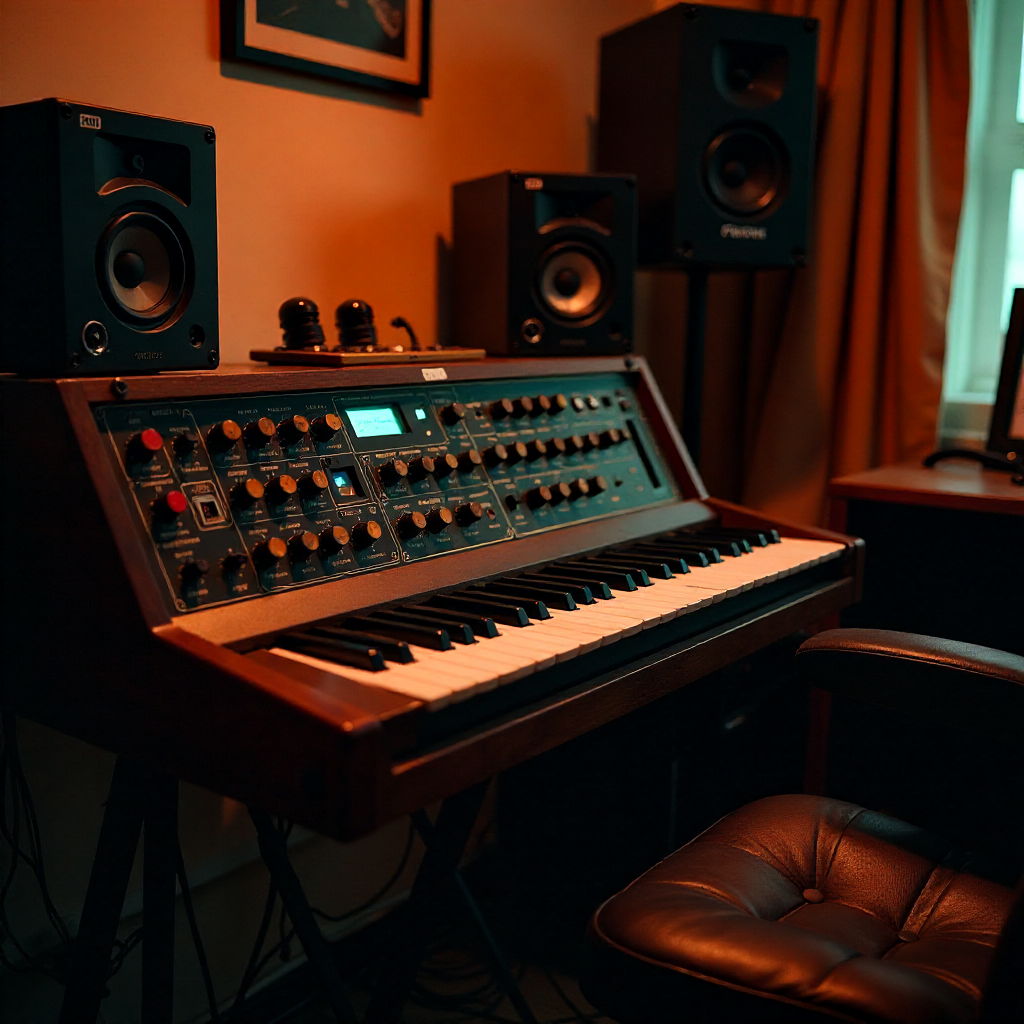
The cinematic quality of gangsta rap production — the sense that a beat could tell a story before a single word was rapped — became a standard that producers from Timbaland to Kanye West to Metro Boomin have chased in their own ways. Heavy bass lines, deliberate tempo choices, and samples that evoke mood rather than just rhythm: all of it traces back to what Dre and his contemporaries were building in Compton and Los Angeles in the late 1980s and early 1990s.
Lyrical Storytelling and Street Narratives — A Tradition That Endures
Gangsta rap established first-person street narrative as one of hip-hop's most respected lyrical modes. The genre demanded specificity — real neighborhoods, real consequences, real stakes — and that demand for specificity became a standard that serious hip-hop artists still hold themselves to.
Ice Cube's verse structure was almost novelistic. He built scenes, populated them with characters, and let the listener draw moral conclusions without being told what to think. That approach — show, don't lecture — runs directly through the work of artists like Kendrick Lamar, whose good kid, m.A.A.d city is essentially a gangsta rap album filtered through 2012 sensibility and expanded narrative ambition.
The lyricism and street narrative tradition gangsta rap established also created a framework for accountability. Rappers who couldn't back up their lyrics with lived experience faced rejection from the culture. That standard, for better or worse, shaped how artists present themselves and what audiences expect. Authenticity became currency, and gangsta rap minted it.
From Gangsta Rap to Trap and Drill — Tracing the Lineage
Trap music and drill music are the most direct descendants of gangsta rap's thematic and sonic legacy. The lineage is clear once you know what to listen for.
Trap, which emerged from Atlanta in the early 2000s through artists like T.I., Gucci Mane, and Young Jeezy, carried forward gangsta rap's street-level realism and its unflinching examination of drug economies and survival. The subject matter was updated for a new geography and generation, but the core commitment to documenting life as it was actually lived — not as it should be — came directly from the West Coast playbook.
Drill, which originated in Chicago around 2012 with Chief Keef and later migrated to New York and the UK, pushed the darkness further. Where gangsta rap had atmosphere and narrative structure, drill stripped both away in favor of blunt, almost reportorial delivery over menacing minor-key beats. It's gangsta rap with the melodrama removed — just the facts, delivered cold.
Both genres absorbed gangsta rap's most essential lesson: the audience rewards honesty over performance. That lesson came from N.W.A, and it hasn't expired.
Cultural and Commercial Impact — Bringing Hip-Hop to the Mainstream
Gangsta rap didn't just influence other rap — it broke hip-hop into mainstream American culture at a scale that earlier styles hadn't achieved. The controversy helped. When the FBI sent a letter to Ruthless Records in 1989 expressing concern about "F*** tha Police," N.W.A received more press than any rap group in history. Outrage became advertising.
By the mid-1990s, Death Row Records was one of the most commercially powerful labels in the music industry, not just in rap. Snoop Dogg's Doggystyle sold 800,000 copies in its first week in 1993 — a number that reshaped industry assumptions about what hip-hop could do commercially. Labels that had treated rap as a niche product began restructuring entire divisions.
The mainstream crossover that gangsta rap engineered also changed radio, film, and fashion. The aesthetic — oversized clothing, lowrider culture, a specific visual grammar tied to Southern California — became globally recognizable. Hip-hop's current position as the dominant genre in global music doesn't exist without the commercial doors gangsta rap kicked open in the early 1990s.
Why Gangsta Rap's Legacy Still Matters in 2026
In 2026, the influence of gangsta rap is audible in virtually every corner of mainstream hip-hop. The genre's core values — authenticity, narrative specificity, sonic innovation, and refusal to soften hard truths — remain the genre's most respected standards.
Artists like Kendrick Lamar, who won a Pulitzer Prize for DAMN. in 2018, operate in a tradition that gangsta rap built. His Compton roots aren't incidental — they're the foundation. The same is true for artists across drill, trap, and conscious rap who draw on the genre's insistence that hip-hop must reflect real experience.
The 1980s–1990s hip-hop era that gangsta rap dominated produced a template that has proven more durable than almost anyone predicted at the time. What started as a regional sound from Compton became the backbone of a global genre. That's not legacy in the abstract — that's structural influence, baked into the music millions of people listen to every single day.
Frequently Asked Questions
What artists are considered the originators of gangsta rap?
The most widely recognized originators are N.W.A (particularly Ice Cube, Dr. Dre, and Eazy-E), Ice-T, and Schoolly D. N.W.A's Straight Outta Compton (1988) is the genre's definitive early statement, while Ice-T's "6 'N the Mornin'" (1987) is often cited as one of the first gangsta rap recordings.
How did gangsta rap influence trap music?
Trap inherited gangsta rap's commitment to street-level realism and first-person drug economy narratives. Atlanta artists like T.I. and Gucci Mane updated the subject matter and production style for the 2000s South, but the foundational ethos — document the life you actually live — came directly from West Coast gangsta rap.
Why was gangsta rap controversial, and how did that shape its popularity?
The genre's explicit depictions of violence, drug dealing, and anti-police sentiment drew condemnation from politicians, parent groups, and law enforcement. That controversy generated enormous media coverage, which functioned as free promotion and made the music feel transgressive and urgent — qualities that drove sales and cultural cachet simultaneously.
What production techniques from gangsta rap are still used today?
Deep bass lines, atmospheric synthesizer layers, deliberate (often slower) tempos, and cinematic beat construction all trace back to G-funk and gangsta rap production. Modern trap and drill producers use updated versions of these principles — particularly the use of bass weight and mood-driven atmospherics — on records released today.
How did gangsta rap change the business side of the music industry?
Gangsta rap proved that hip-hop could generate major-label commercial returns. Death Row Records and Ruthless Records demonstrated that independent or artist-controlled labels could compete with major corporations, a model that influenced how hip-hop artists have structured deals and ownership ever since. It also forced major labels to take rap seriously as a long-term commercial category rather than a passing trend.